Temperature Probe Sensor About
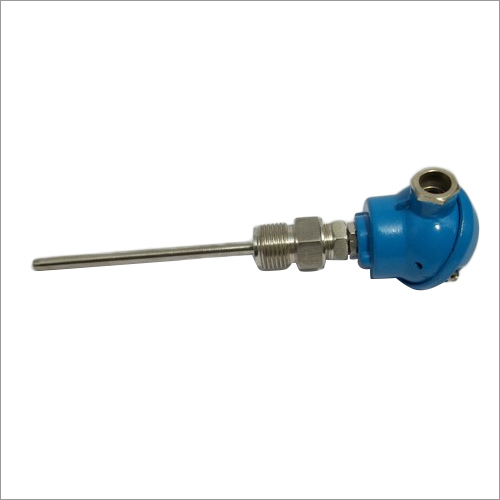
SmartLine temperature probe assemblies are ideal for process manufacturers, Original Equipment Manufacturers (OEMs) and Engineering Procurement Construction (EPC) contractors for temperature measurement for improved safety, reliability and efficiency.
SmartLine temperature probe assemblies are installation-ready temperature measurement assemblies offered with any of SmartLine temperature transmitters, sensor heads, sensors, thermowells and process connections.
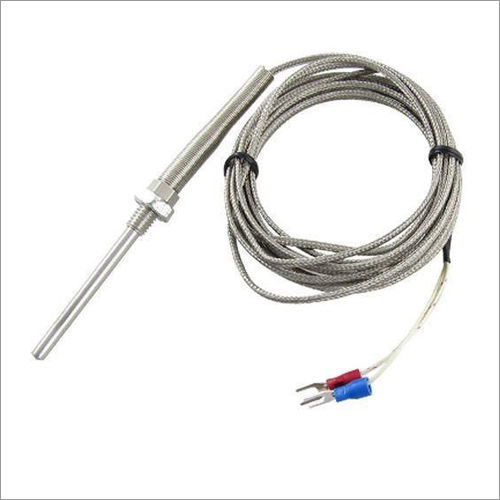
Wide Sensing Range and Rapid AccuracyEngineered to measure temperatures from -50C to +300C, this probe sensor ensures highly accurate results within 0.5C. Its quick response time, less than 5 seconds, is essential for applications requiring immediate feedback, such as in laboratories and industrial settings.
Versatile and Durable ConstructionThe sensor features a stainless steel probe with silicone or Teflon insulation, making it resistant to harsh environments and suitable for both dry and humid conditions. Its IP67 rating guarantees water resistance, making it ideal for immersion or challenging industrial tasks.
Seamless Integration and Broad CompatibilityEquipped with analogue (resistance/voltage) and optional digital outputs, the sensor integrates smoothly with existing control systems. Compatibility with digital temperature controllers and flexible mounting options ensure straightforward installation in automation, HVAC, or medical devices.
FAQ's of Temperature Probe Sensor:
Q: How can the temperature probe sensor be installed in industrial or laboratory settings?
A: The sensor supports both panel mount and immersion installations. Simply secure the probe in the desired location using the provided terminals and connect the cable (1 meter length) to your system as per the wiring diagram.
Q: What benefits does the IP67 waterproof rating offer in practical use?
A: The IP67 rating ensures the probe is dust-tight and can withstand submersion in water, making it reliable for operations in wet, humid, or harsh industrial environments without risk of performance degradation.
Q: When is it recommended to use analogue versus digital output models?
A: Analogue output (resistance/voltage) models are suitable for systems requiring direct integration with standard controllers or instrumentation. Digital output models are preferred when high precision and minimal signal loss are necessary, especially over longer cable distances.
Q: Where can this temperature sensor be used most effectively?
A: The probe sensor is ideal for industrial automation, HVAC controls, laboratory experiments, and medical instrumentation where reliable and accurate temperature monitoring is required.
Q: What is the process for integrating the sensor with a digital temperature controller?
A: Connect the sensor's terminals to your controller as per the controller's input specifications. Typically, this involves matching the sensor's output (analogue/digital) with the compatible input on the controller, ensuring a 3-5V DC power supply as needed.
Q: How does the sensor maintain accuracy and longevity in various environments?
A: Robust materials like stainless steel and ceramic/epoxy insulation ensure resilience in extreme temperatures and humid conditions. With a rated operating life of over 100,000 cycles, it maintains accuracy throughout its use.
Q: What are the primary advantages of using this sensor in HVAC applications?
A: In HVAC systems, the probe's fast response and wide temperature range allow efficient and accurate monitoring, boosting system reliability and energy efficiency while safeguarding sensitive equipment.





 Send Inquiry


 Send Inquiry